Introduction
Transport and logistics businesses manage multiple activities simultaneously, including vehicle allocation, driver coordination, trip scheduling, fuel expenses, delivery tracking, customer communication and payment records.
When these operations are managed through paper registers, spreadsheets and separate applications, maintaining accurate information can become difficult. Business owners may struggle to monitor vehicle utilisation, calculate trip expenses, track delivery status and review operational performance.
A transport management system can help bring these activities into a central digital platform.
For transport operators, fleet owners, logistics companies and distribution businesses in Kolkata and Haldia, custom software can simplify daily operations and provide better visibility into business activities.
HSR Hi-Tech Solutions provides custom software development, ERP-related solutions and web application development to help businesses digitise their operational processes.
What Is Transport Management Software?
Transport Management Software (TMS) is a digital platform that helps businesses plan, manage and monitor transportation operations.
Depending on business requirements, it can include features for:
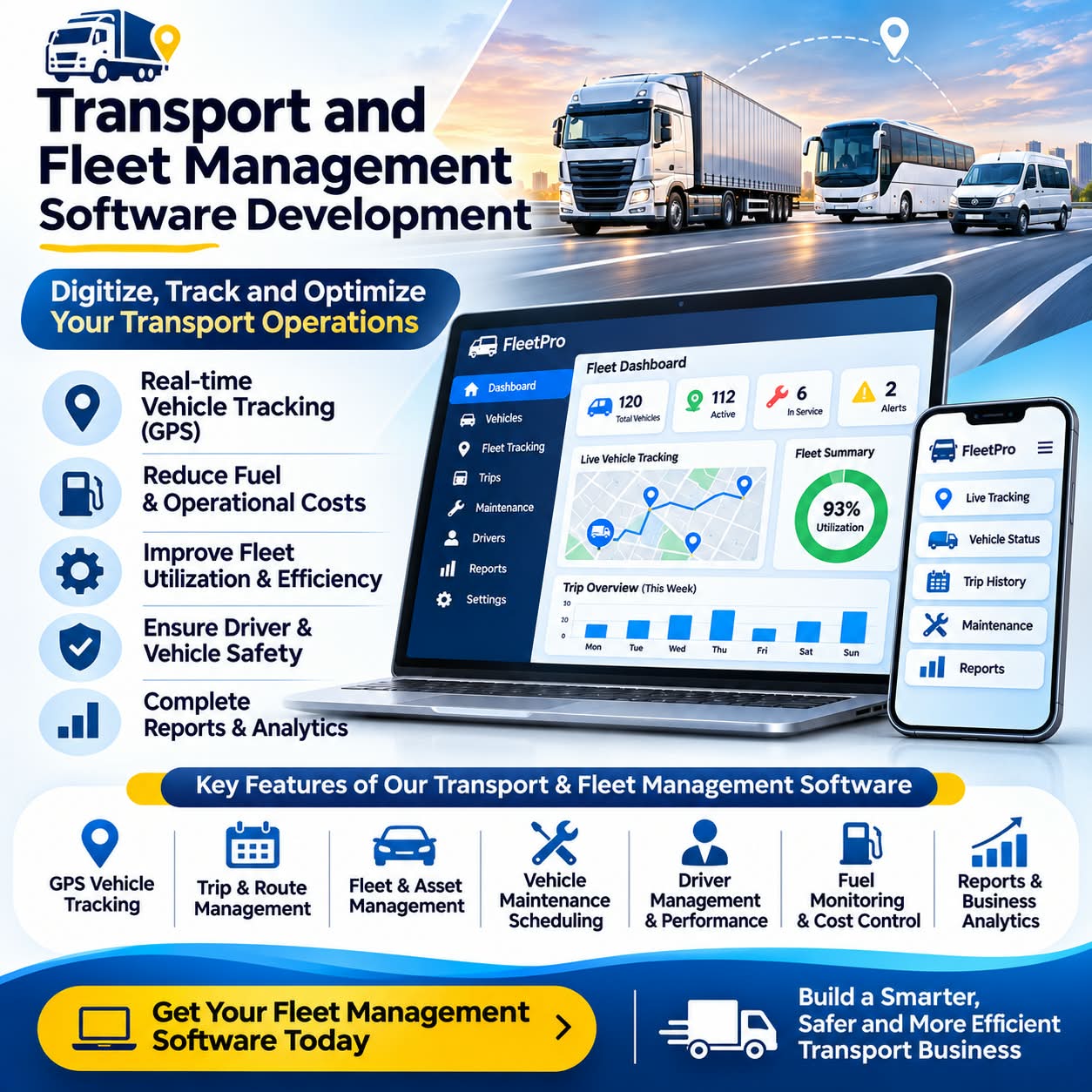
Vehicle and fleet management
Driver management
Trip scheduling and allocation
Route and delivery management
Fuel and expense tracking
Maintenance records
Customer and booking management
Invoice and payment records
Operational reporting
A small transport operator may need a simple vehicle and trip management application, while a larger logistics company may require a comprehensive platform with multiple departments, branches and user roles.
The right system should be designed around the actual transportation workflow.
Why Transport Businesses in Kolkata and Haldia Need Digital Management Systems
Transport businesses often handle information across vehicles, drivers, customers, trips and expenses. A structured software system can make these records easier to manage.
1. Centralised Vehicle Management
Fleet owners need to maintain accurate information about every vehicle.
A vehicle management module can store:
Vehicle registration number
Vehicle type and capacity
Insurance details
Permit information
Fitness certificate details
Pollution certificate information
Vehicle ownership records
Service and maintenance history
A centralised vehicle database can help authorised employees retrieve important information without searching through physical files.
The system can also support reminders for document renewals and scheduled maintenance.
2. Driver and Employee Management
Driver coordination is an important part of transportation operations.
A driver management module can maintain:
Driver profiles
Contact information
Driving licence details
Assigned vehicles
Trip assignments
Attendance records
Driver availability
Trip history
Businesses can use this information to organise driver allocation and maintain operational records.
3. Trip Scheduling and Management
Managing multiple trips manually can become complicated, especially when vehicles operate across different routes and customer locations.
A trip management module can help businesses:
Create new trip records
Assign vehicles and drivers
Record pickup and delivery locations
Maintain trip schedules
Track trip status
Record completed journeys
Review trip history
This gives management a structured view of ongoing and completed transportation activities.
4. Fuel and Expense Management
Fuel and operational expenses directly affect transportation costs.
A fleet management system can help maintain records of:
Fuel purchases
Fuel quantities
Fuel expenses
Toll charges
Driver allowances
Maintenance expenses
Repair costs
Other trip-related expenses
Businesses can generate vehicle-wise and trip-wise expense reports to understand operating costs.
5. Maintenance and Document Reminders
Vehicle maintenance and documentation require regular attention.
A digital system can maintain maintenance schedules, service records, insurance renewal dates and other important vehicle documents.
Automated reminders can help employees identify upcoming tasks and reduce dependence on manual follow-ups.
Essential Features of Fleet Management Software
A modern fleet management application can be developed with different modules according to the size and requirements of the business.
Vehicle Tracking and Location Monitoring
Businesses that require location visibility can integrate GPS-based tracking solutions.
Depending on the tracking provider and hardware, this may support:
Current vehicle location
Trip route history
Vehicle movement records
Geofence alerts
Estimated arrival information
Vehicle status monitoring
Real-time tracking requires compatible GPS devices or third-party tracking services. The software should clearly define which tracking features are supported.
Route and Delivery Management
Logistics companies need to coordinate pickups, deliveries and transportation schedules.
A route management module can help maintain delivery locations, assigned vehicles, planned routes and delivery status.
For businesses with multiple delivery points, route optimisation may also be considered through suitable mapping and routing integrations.
Customer and Booking Management
Transport businesses need to maintain customer information and booking records.
A customer management module can include:
Customer profiles
Booking requests
Pickup and delivery details
Transport quotations
Booking status
Customer payment history
This can help businesses manage enquiries and transportation orders in one place.
Billing and Payment Management
A transport management application can also support billing and financial record management.
Useful features may include:
Customer-wise invoices
Trip-wise billing
Freight charges
Additional service charges
Payment records
Outstanding balances
Expense summaries
Where required, accounting or GST billing software can be integrated with the transportation platform.
Management Dashboard
A central dashboard can provide an overview of important business information.
Possible dashboard metrics include:
Total registered vehicles
Active vehicles
Ongoing trips
Completed trips
Available drivers
Pending deliveries
Fuel expenses
Maintenance costs
Outstanding customer payments
The dashboard can be customised according to management requirements.
Transport Management Software vs. Fleet Management Software
These two terms are closely related, but they generally focus on different operational areas.
Transport Management Software focuses on the movement of goods or passengers. It commonly supports trip planning, bookings, dispatch, delivery coordination and freight-related records.
Fleet Management Software focuses on managing the vehicles used by a business. It commonly includes vehicle information, driver assignments, maintenance schedules, fuel expenses and location tracking.
Many transportation businesses need both capabilities.
A combined system can connect vehicle records with trip assignments, driver information, expenses and customer bookings.
Custom Transport ERP Software for Logistics Businesses
As a transport company grows, it may need more than basic fleet tracking.
A custom transport ERP system can connect multiple departments and operational workflows.
For example, a logistics company may require:
Operations Management: Manage bookings, trip assignments, dispatch and delivery status.
Fleet Management: Maintain vehicle details, documents, service history and availability.
Driver Management: Maintain driver profiles, assignments and trip records.
Accounts and Billing: Manage customer invoices, expenses, payments and outstanding balances.
Customer Management: Maintain customer details, enquiries and transportation history.
Reporting: Generate operational and financial summaries.
The modules can be implemented together or introduced in phases, depending on business priorities and budget.
Custom Transport Software vs. Ready-Made Solutions
Businesses can choose between ready-made transportation software and custom software development.
Ready-made software may be suitable when the existing features meet the business's operational requirements.
Custom software may be useful when a company has specialised processes or needs integration with existing systems.
Consider the following before choosing:
Number of vehicles and drivers
Number of trips handled daily
Type of transportation business
Need for GPS tracking
Customer booking requirements
Billing and expense workflows
Integration with existing applications
Reporting and management requirements
Future expansion plans
A requirement assessment helps identify the features that are genuinely necessary.
How to Choose a Transport Software Development Company in Kolkata or Haldia
Selecting the right development partner is important because transportation software must support real business workflows.
Understand Their Technical Capabilities
Check whether the company can develop web applications, mobile applications, databases, dashboards and third-party integrations.
Evaluate the Software Scope
Explain your transportation process and ask for a feature-based proposal instead of selecting software only by its advertised features.
Discuss GPS and Mapping Integrations
If you need vehicle tracking or route management, clarify the required GPS hardware, service providers, API integrations and associated recurring costs.
Check Mobile Accessibility
Drivers and field employees may need to update trip information while away from the office. A mobile-friendly interface or dedicated mobile application can be useful.
Review Data Security
Ask about user permissions, secure authentication, data backups and access controls for vehicle, driver and customer information.
Confirm Ongoing Support
Discuss maintenance, bug fixes, system updates, hosting and technical assistance after launch.
Transport and Logistics Software Development by HSR Hi-Tech Solutions
HSR Hi-Tech Solutions is an MSME-registered software development and IT services company with offices in Kolkata and Haldia, West Bengal.
The company provides custom software development, ERP-related solutions, web applications, mobile applications, cloud computing and IT consulting.
For transport and logistics businesses, a software project can be planned around operational requirements such as:
Vehicle and fleet records
Driver management
Trip scheduling
Customer bookings
Expense tracking
Maintenance reminders
Billing and reporting
GPS and mapping integrations
The exact features, technology and implementation approach depend on the business requirements.
HSR Hi-Tech Solutions follows a requirement-based development approach, beginning with understanding the business workflow and defining the software scope before development.
Whether you operate a small transport business or manage a growing logistics operation, a properly planned digital platform can help organise important activities.
Frequently Asked Questions
1. What is fleet management software?
Fleet management software is a digital system used to manage vehicles, drivers, maintenance schedules, fuel expenses, vehicle documents and other fleet-related activities.
2. What is transport management software?
Transport management software helps businesses manage transportation activities such as bookings, trip scheduling, vehicle allocation, dispatch, delivery coordination and freight records.
3. Can transport management software include GPS tracking?
Yes. GPS tracking can be integrated using compatible tracking devices or third-party GPS service providers. Availability depends on the hardware, provider and integration requirements.
4. Can fleet management software track fuel expenses?
Yes. A system can maintain fuel purchase records, quantities, expenses and vehicle-wise fuel reports. More advanced analysis depends on the available data and integrations.
5. Can transport software be customised for a logistics company?
Yes. Custom transport software can be developed around a company's vehicle structure, driver allocation process, trip workflows, billing requirements and reporting needs.
6. Can transport management software include a mobile application?
Yes. A mobile application can be developed for drivers, field employees or customers, depending on the required features and access permissions.
7. How much does transport management software development cost?
The cost depends on the number of modules, users, vehicles, integrations, GPS requirements and overall project complexity. A detailed requirement assessment is needed to prepare an accurate quotation.
8. Does HSR Hi-Tech Solutions provide software development services in Kolkata and Haldia?
Yes. HSR Hi-Tech Solutions has offices in Kolkata and Haldia and provides custom software development, ERP-related services, web applications and IT consulting.
Conclusion
Managing transportation operations requires coordination between vehicles, drivers, customers, trips, expenses and delivery schedules. When these activities are maintained through disconnected records, businesses may find it difficult to monitor operations and access accurate information.
A well-planned transport or fleet management system can help bring these processes together through a central digital platform.
If your company is looking for transport management software development in Kolkata or Haldia, HSR Hi-Tech Solutions can help you explore a custom solution based on your business requirements.
Looking to digitise your transport and logistics operations?
Contact HSR Hi-Tech Solutions to discuss your software project.
Website: https://www.hsrsolutions.co.in/
Email: info@hsrsolutions.co.in
Phone: +91 9102538091
HSR Hi-Tech Solutions – The Future of Digitalization.