Discover tailored solutions for your business needs with our free quote service. Let our experts at HSR Hi-Tech Solutions guide you towards success. Request your complimentary quote today!
Thank you!
Your request has been submitted successfully.
Our team will reach out to you soon.
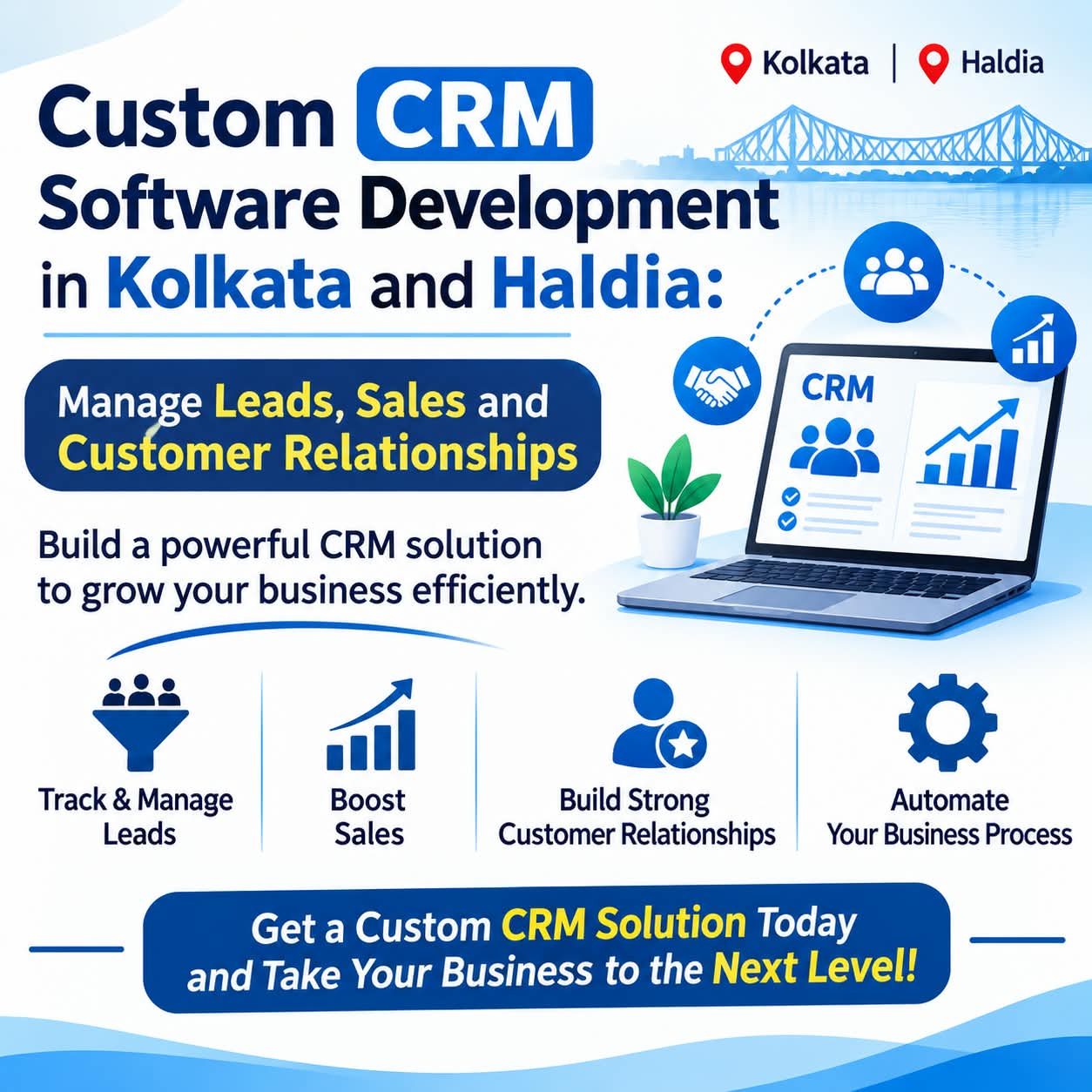
Custom CRM Software Development in Kolkata and Haldia: Manage Leads, Sales and Customer Relationships
Looking for CRM software in Kolkata or Haldia? Discover how custom CRM development helps businesses manage leads, automate sales and improve customer relationships.
S
System Admin
· 9 min read
In this article
Custom CRM Software Development in Kolkata and Haldia: Manage Leads, Sales and Customer Relationships
Every growing business needs a reliable way to manage its customers. However, many organisations still depend on spreadsheets, phone contacts, WhatsApp conversations and manually maintained records to track enquiries and sales activities.
This approach may work when a business has only a few customers. But as enquiries increase and sales teams expand, managing customer information becomes more complicated. Important follow-ups can be missed, communication history becomes scattered and business owners may struggle to understand their sales performance.
This is where Customer Relationship Management (CRM) software becomes valuable.
For businesses in Kolkata, Haldia and across West Bengal, a well-designed CRM system can centralise customer information, organise leads, streamline sales processes and improve team coordination.
What Is CRM Software?
CRM stands for Customer Relationship Management. CRM software is a business application that helps organisations manage customer information, enquiries, sales opportunities, communication history and follow-up activities.
Instead of maintaining separate spreadsheets and records, employees can use a centralised system to access relevant customer information according to their permissions.
A CRM platform can help businesses:
Store and organise customer details.
Capture enquiries from websites and advertising campaigns.
Assign leads to sales representatives.
Track sales opportunities and deal stages.
Schedule follow-up reminders.
Maintain customer interaction history.
Generate sales reports and performance dashboards.
The purpose of CRM software is not simply to store contact information. It is to help businesses manage their customer relationships throughout the sales and service journey.
Why Businesses in Kolkata and Haldia Need CRM Software
Businesses across Kolkata and Haldia operate in different industries, including manufacturing, education, healthcare, real estate, retail, consulting and professional services.
Many of these organisations receive enquiries through multiple channels, such as websites, telephone calls, social media, online advertisements and referrals.
Without a structured management system, these enquiries can become difficult to track.
1. Centralised Customer Information
A CRM system stores customer information in one organised platform. Employees can review contact details, previous interactions, enquiry requirements and sales status without searching through multiple files.
This creates a more consistent customer management process.
2. Better Lead Management
Businesses investing in Google Ads, Meta Ads, websites and other marketing channels need a reliable way to manage incoming enquiries.
A CRM can record lead sources, assign leads to employees and track their progress through different stages.
Management can also identify which marketing channels are generating enquiries and which leads are progressing towards conversion.
3. Automated Follow-Up Reminders
Delayed follow-ups can affect customer experience and sales opportunities.
CRM software can help employees schedule reminders and automate selected tasks based on lead status, enquiry date or other business rules.
For example, a sales representative may receive a reminder to contact a prospective customer two days after sending a quotation.
4. Improved Sales Team Coordination
When several employees handle customer enquiries, it becomes important to know who is responsible for each lead.
A CRM can provide lead ownership, activity tracking, internal notes and permission-based access.
Managers can review team activities and identify enquiries that need attention.
5. Business Performance Reporting
A CRM dashboard can help business owners understand:
Total enquiries received.
Leads assigned to each employee.
Follow-ups completed and pending.
Opportunities in different sales stages.
Won and lost deals.
Lead conversion trends.
Performance by marketing source.
These reports help management make decisions based on organised business information.
Essential Features of Custom CRM Software
The right CRM system should reflect the actual workflow of a business. The following features can form the foundation of a practical CRM solution.
1. Lead and Contact Management
A central lead database should store important information such as customer name, phone number, email address, company details, enquiry source and requirements.
It should also support search, filtering, duplicate management and lead categorisation.
2. Sales Pipeline Management
A visual sales pipeline helps teams understand where each opportunity stands.
Typical stages may include:
New Enquiry
Contacted
Interested
Follow-Up Required
Quotation Sent
Negotiation
Converted
Lost
Businesses should be able to customise these stages according to their sales process.
3. Task and Follow-Up Management
Employees should be able to create tasks, assign responsibilities, set deadlines and record completed activities.
Automated reminders can reduce dependency on manual tracking.
4. Website and Landing Page Integration
A CRM can be integrated with business websites and enquiry forms so that submitted information enters the lead database automatically.
This is particularly useful for companies running digital marketing campaigns in Kolkata, Haldia and other target markets.
5. WhatsApp, Email and Communication Integration
Depending on available APIs and provider policies, CRM software can integrate with communication channels to help businesses organise customer interactions.
For example, approved WhatsApp Business integrations may support message workflows, notifications and customer communication records.
Integration requirements and messaging charges should be considered during implementation.
6. Employee and Role Management
Different employees need different levels of access.
A CRM should support role-based permissions for administrators, managers, sales executives and other team members.
For example, a sales representative may only access assigned leads, while a manager can review team performance.
7. Custom Reports and Analytics
Business owners often need reports that are not available in standard CRM products.
A custom CRM can include dashboards for lead sources, sales performance, employee productivity, conversion rates and pending follow-ups.
8. Mobile-Friendly CRM Access
Sales teams may work outside the office, attend meetings or visit customers.
A responsive CRM interface or dedicated mobile application can help authorised employees access customer information and update activities while travelling.
Ready-Made CRM vs Custom CRM Software
Businesses can choose between an existing CRM platform and a solution developed around their own processes.
Both approaches have advantages.
Comparison
Ready-Made CRM
Custom CRM
Initial setup
Usually faster
Requires planning and development
Features
Predefined feature set
Designed around business needs
Workflow
Platform-dependent
Customisable
Integrations
Available integrations and APIs
Built according to requirements
Pricing
Often subscription-based
Project and maintenance dependent
Flexibility
Limited by platform
Greater control over workflows
Ownership
Provider controls the platform
Greater control over the developed application
A ready-made CRM is often suitable for businesses with standard sales processes and limited customisation requirements.
Custom CRM software may be a better option when a business needs specialised workflows, department-specific dashboards, unique approval systems or integration with existing applications.
Custom development is not automatically the best choice for every organisation. Businesses should compare total cost, implementation time, maintenance and future requirements before deciding.
Which Industries Can Benefit from Custom CRM Development?
Real Estate Companies
Real estate businesses can use CRM software to manage property enquiries, buyer information, site visits, sales representatives and booking follow-ups.
Educational Institutions and Admission Consultants
Educational organisations can manage student enquiries, counselling activities, admission stages, course preferences and follow-up schedules through a structured CRM.
Manufacturing and Industrial Companies
Manufacturers and industrial suppliers can use CRM systems to manage distributors, business enquiries, quotations, purchase discussions and customer relationships.
Healthcare and Service Providers
Service organisations can organise enquiries, appointment requests, customer communication and service follow-ups. Sensitive information requires appropriate security and access controls.
Digital Marketing and IT Agencies
Agencies can use CRM software to track incoming leads, client requirements, proposals, project discussions and sales conversion activities.
Retail and Distribution Businesses
Retailers and distributors can organise customer records, sales enquiries, repeat business opportunities and communication history.
How Custom CRM Software Development Works
A successful CRM project should begin with business requirements rather than coding.
A typical development process includes:
Step 1: Business Requirement Analysis
Understand how the business currently receives enquiries, manages customers, assigns leads and closes sales.
Step 2: Workflow and Feature Planning
Define user roles, lead stages, approval rules, reporting requirements and required integrations.
Step 3: UI/UX Design
Create an easy-to-use interface for administrators, managers and employees.
Step 4: Software Development
Develop the frontend, backend, database and required business modules.
Step 5: Integration and Testing
Connect approved external services, import required data and test the application for functionality, security and performance.
Step 6: Deployment and Training
Deploy the CRM, configure user access and help employees understand the system.
Step 7: Maintenance and Improvements
Monitor performance, resolve issues and introduce new features as business requirements evolve.
How Much Does Custom CRM Software Development Cost?
The cost of CRM development depends on the number of modules, users, integrations, complexity of workflows, security requirements and reporting needs.
A basic lead management CRM may require considerably less development effort than an enterprise platform with multiple departments, advanced automation, mobile applications and third-party integrations.
Businesses should evaluate the complete project cost, including:
Requirement analysis and UI/UX design.
Frontend and backend development.
Database and hosting infrastructure.
External API or integration charges.
Security and testing.
Deployment and employee training.
Ongoing maintenance and support.
A detailed requirement assessment is the best starting point for obtaining a realistic project estimate.
Why Choose HSR Hi-Tech Solutions for CRM Development?
HSR Hi-Tech Solutions provides software development and digital technology services for businesses looking to improve their operations through technology.
Our software development approach focuses on understanding business workflows and building practical digital solutions.
Depending on project requirements, we can help businesses explore:
Custom CRM software development.
Lead and enquiry management systems.
Sales pipeline management.
Employee and role-based dashboards.
Website and application integration.
Business process automation.
Custom reporting and analytics.
Ongoing software maintenance.
We work with businesses in Kolkata, Haldia and other locations to understand their requirements and plan suitable software solutions.
Whether you are a startup, service provider, educational organisation, manufacturer or growing enterprise, the right CRM can help bring greater structure to your customer management process.
What is the difference between CRM and ERP software?
CRM software primarily focuses on customer relationships, leads, sales and communication. ERP software manages broader business operations such as finance, inventory, procurement, human resources and production. Some organisations use both systems together.
Can CRM software be customised for my business?
Yes. Custom CRM software can include business-specific lead stages, forms, dashboards, approval workflows, user permissions and integrations.
Can CRM software capture website enquiries automatically?
Yes. A website can be integrated with a CRM through APIs or other supported integration methods so that submitted enquiry details are recorded automatically.
Can a CRM be accessed through mobile phones?
Yes. CRM applications can be designed with responsive interfaces or dedicated mobile applications, depending on business requirements.
Is custom CRM software suitable for small businesses?
It can be, particularly when a business has specific workflows that existing products cannot support. However, a ready-made CRM may be more economical when standard features are sufficient.
How long does CRM software development take?
The timeline depends on project scope, integrations, user roles and complexity. A basic CRM generally requires less development time than a multi-department enterprise platform. A timeline should be established after requirements are reviewed.
Conclusion
Managing customer relationships efficiently is essential for businesses that want to improve sales coordination, organise enquiries and deliver consistent customer experiences.
CRM software provides a centralised way to manage leads, track opportunities, automate follow-ups and understand business performance.
For companies in Kolkata and Haldia, choosing between a ready-made CRM and custom CRM development should depend on actual business requirements, available budget and long-term objectives.
Looking for custom CRM software development in Kolkata or Haldia? Connect with HSR Hi-Tech Solutions to discuss a CRM solution aligned with your business workflow.
Part of the team at HSR Hi-Tech Solutions, an MSME-registered IT company in Kolkata and Haldia building websites, apps, ERP and AI solutions, and running the marketing campaigns we write about.
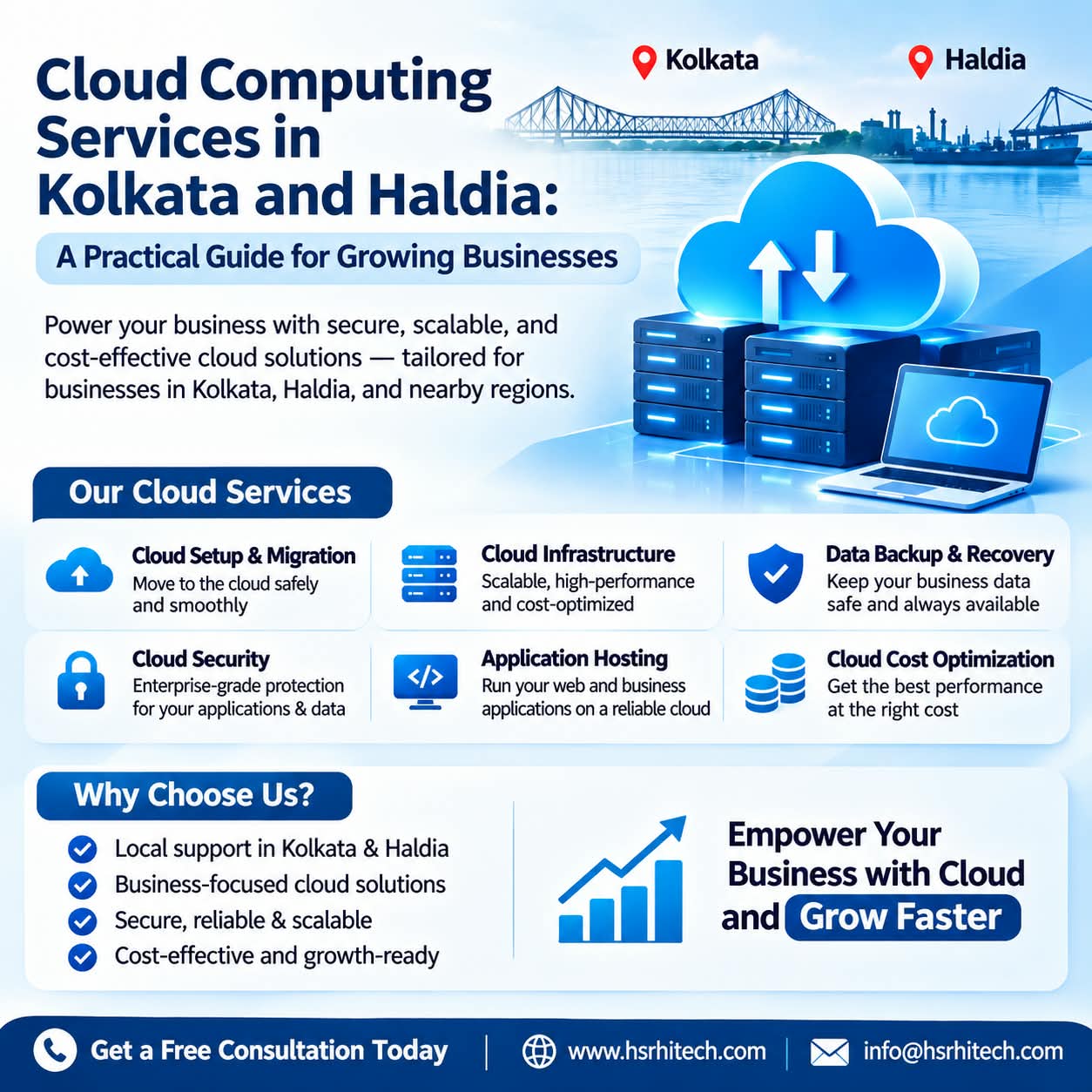
Explore cloud computing services in Kolkata and Haldia. Learn how cloud hosting, data backup, migration and scalable IT solutions support business growth.
Copy CMS metadata
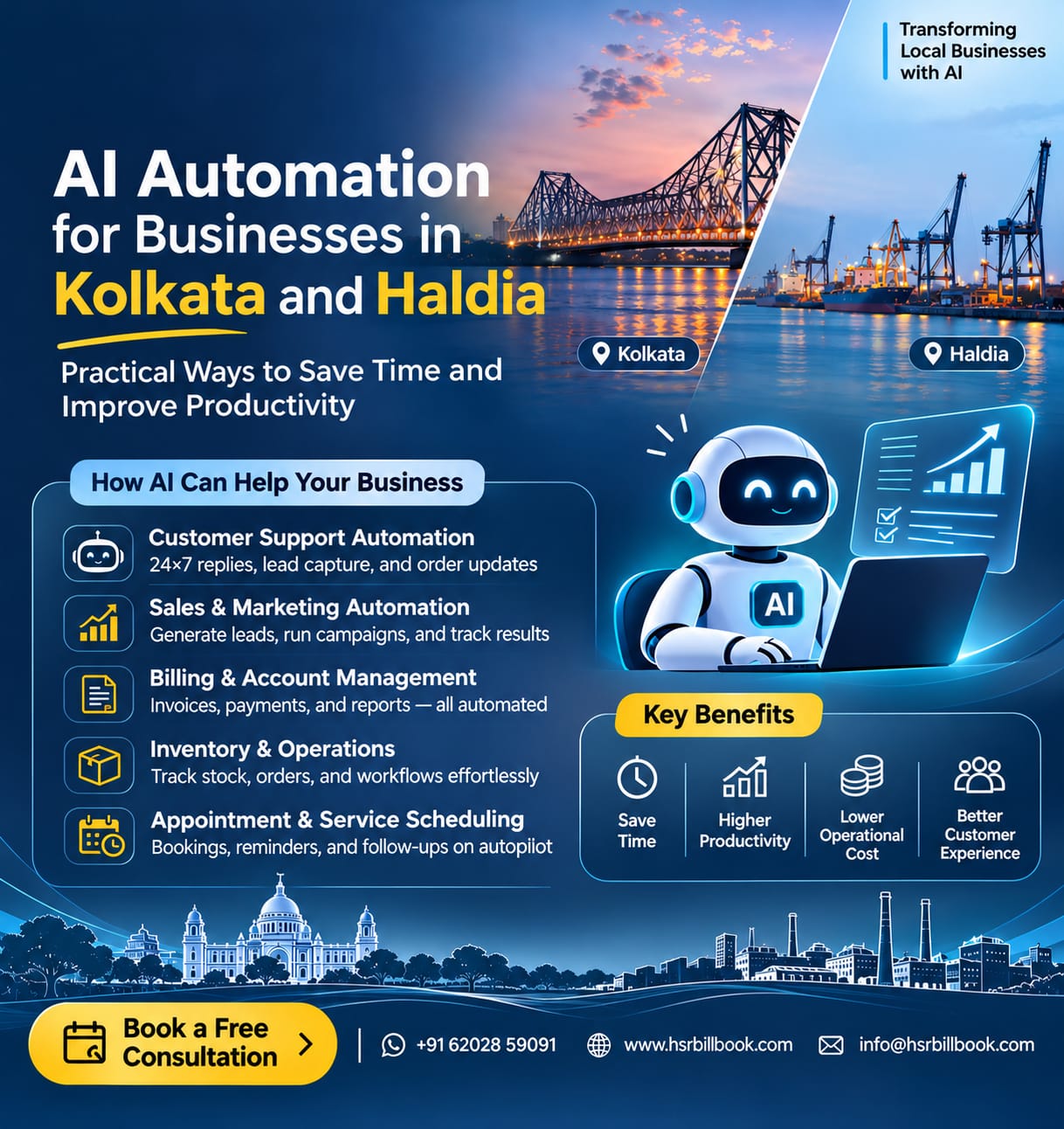
Discover how AI automation helps businesses in Kolkata and Haldia streamline workflows, reduce repetitive tasks and improve productivity with intelligent digital solutions.
Discover how custom ERP software helps businesses in Kolkata and Haldia manage inventory, employees, accounts and operations with integrated business management solutions.